
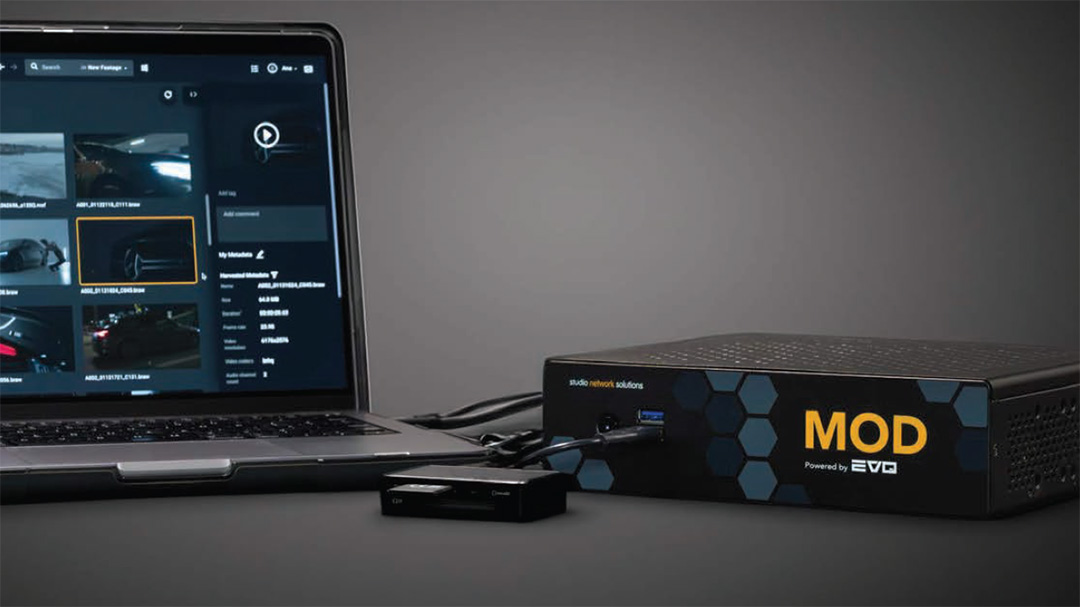
In its September/October 2026 issue, Pro Moviemaker asked whether filmmaking is facing a storage crisis.
The feature, “The Big Storage Squeeze,” notes that flash memory prices are climbing, camera files keep getting bigger, and production teams are paying for it. Pro Moviemaker asked Melanie Ciotti, Director of Marketing at Studio Network Solutions (SNS), the company behind the EVO shared storage server, for her take on what’s driving the so-called “storage crisis”.
Her short answer: “You can call it a crisis, a shortage, a bubble. None of that changes what production teams are up against day to day. There are still stories to tell and deadlines to hit.”
The article explores why storage prices are increasing, how filmmakers are being affected, the importance of strong backup and archive strategies in modern production workflows, and more. Here are the key points and takeaways from the article.
Read the full article in Pro Moviemaker for the complete story.

Why Is Media Storage Getting More Expensive?
Media teams are competing for the same hardware as the AI industry.
“The components that power media storage are also powering AI systems and massive data centers,” Ciotti told Pro Moviemaker. “This drives demand and competition for those limited resources, resulting in price volatility.”
Supply should catch up eventually, but nobody knows when, and production schedules don’t pause in the meantime. “Deadlines don’t wait for prices to settle and neither should your workflow,” Ciotti added.
Should You Buy The Cheapest Storage Per Terabyte?
Not if it slows your team down. As the article puts it, “cheap storage that continually slows down the people using it might prove very expensive indeed.”
Rising prices can push buyers toward the lowest cost per terabyte, and for one person offloading cards, that math can work. For a team sharing projects and a growing library, storage is infrastructure, and slow infrastructure costs time every day. The factors that matter more are: reliable performance, data security, workflow integrations, collaboration, organization, automations, and scalability.
How Should Filmmakers Apply The 3-2-1 Backup Rule?
A single copy of your footage could be one drive failure away from being gone. And keeping every copy in the same building defeats the purpose, since a single fire or theft can destroy them all.
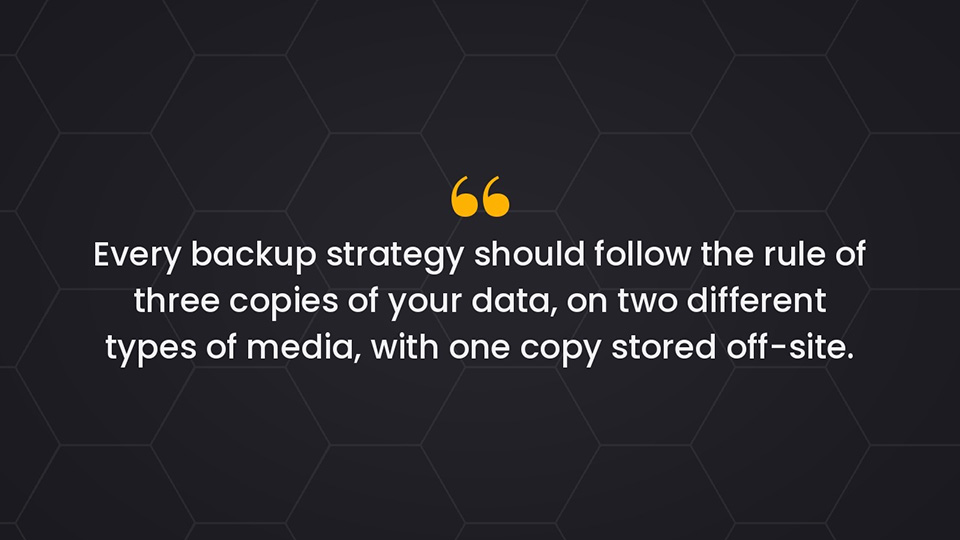
To protect valuable data, Ciotti said: “Every backup strategy should follow the rule of three copies of your data, on two different types of media, with one copy stored off-site.”
It’s best practice to test your restores regularly, too. A backup you can’t restore from won’t help when you need it.
What Is Tiered Storage?
When prices are going up, it’s important to keep in mind that not everything needs to sit on your most expensive drives. That’s where Ciotti stressed the importance of a tiered approach to storage.
Tiered storage gives each phase of a project the kind of storage it actually needs. Work in progress lives on fast shared storage, wrapped projects shift to lower-cost nearline, and masters go to an on-premise or cloud archive for long-term retention.
The article cited the SNS EVO shared storage server as an example. Media moves across EVO’s high-performance online storage, EVO Nearline systems, and Trio cloud archive storage effortlessly, and with EVO’s built-in media asset manager (ShareBrowser MAM), users can search and preview media across any of these storage tiers.
How Is AI Changing Media Archives?
Every team has footage on some drive somewhere that they just can’t find when they need it. Folders and file names only go so far, and that’s where AI is starting to change what storage can do.
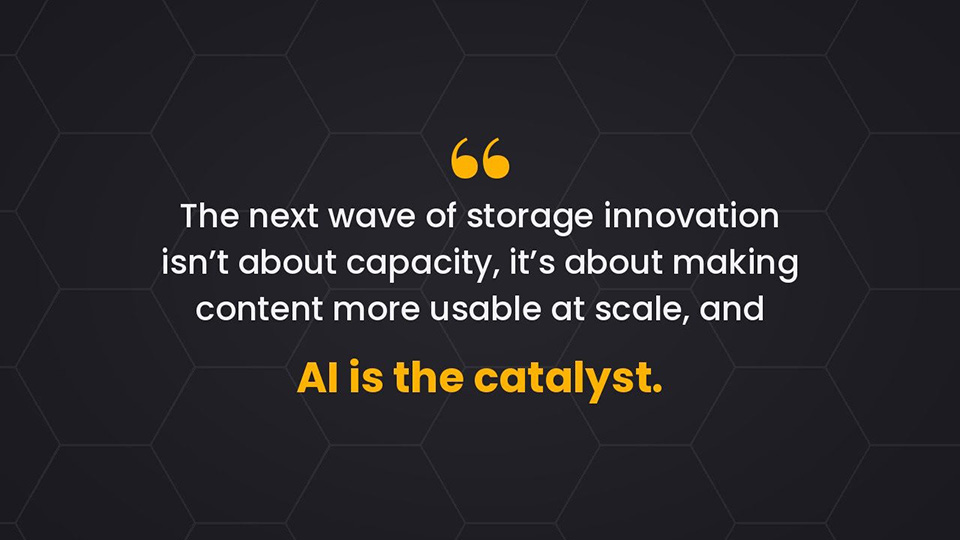
“The next wave of storage innovation isn’t about capacity, it’s about making content more usable at scale, and AI is the catalyst,” Ciotti asserted. “The more a team understands its own footage, the more value it can pull from their content.”
The article notes that “The SNS approach illustrates where this tech is heading,” pointing to SNS AI Suite, which handles transcription, translation, metadata generation, classification, summarization, and content recognition.
Pro Moviemaker also named two things filmmakers should look for in AI tools for their post-production team:
- Local processing, so confidential or unreleased media stays on-site.
- A perpetual license with unlimited local usage, instead of pricing by the minute or token.
The article’s emphasizes that when AI can recognize what’s inside the footage, an archive becomes a library the team can reuse, not just a cost to keep paying for.
Why Is Storage A Workflow Decision, Not Just An IT Purchase?
Per the article, treating storage as an IT purchase is a common mistake. Cheap drives can still cost a team hours in slow copies, duplicate files, and searching for shots.
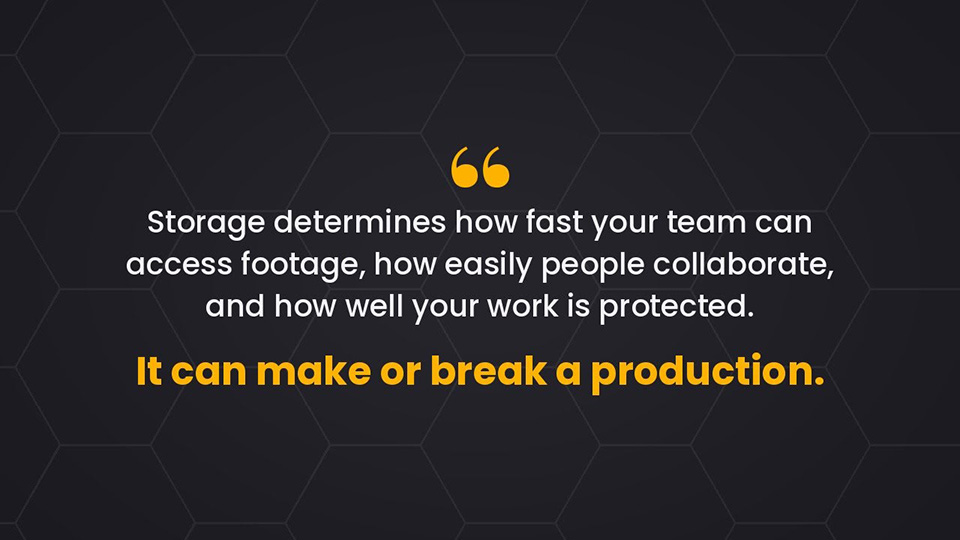
“Storage determines how fast your team can access footage, how easily people collaborate, and how well your work is protected,” Ciotti added. “It can make or break a production.”
Before comparing capacity and price, the article recommends starting with how your team works: who needs access and from where, how fast media has to move, what happens when projects wrap, and how quickly you could recover from a failed drive.
“Ultimately, the best storage workflow might be the one filmmakers barely notice,” Pro Moviemaker asserted.
Ciotti agreed: “When storage fits how a team actually works, footage moves faster, collaboration gets easier and less time goes to managing files instead of making them.”
Read The Full Article
The Pro Moviemaker feature also covers on-camera media and SSD vs. HDD tradeoffs. Its closing point: fast working storage, nearline, and cloud archive each have a role, and “the smartest workflow doesn’t necessarily choose between them; it gives each one the appropriate job.”
Read the full article in the September/October 2026 issue of Pro Moviemaker.
SNS products also appear in the feature’s photography, including MOD powered by EVO on page 48, where the feature opens, and SNS’s award-winning software suite on page 51, captioned as an example of storage that combines AI file sorting with remote collaboration.
Want to see how EVO shared storage and more solutions from SNS can handle your tiered storage, cloud backup, and AI-powered media workflow? Contact SNS to schedule a demo today.
Source: “The Big Storage Squeeze,” Pro Moviemaker, September/October 2026, pages 48–51, Bright Publishing Ltd.