

Each year, SVG connects with industry leaders to ask the questions on everyone’s mind—what’s working, what’s changing, and where sports broadcasting goes from here. For 2026, the conversation keeps coming back to the same themes: artificial intelligence, hybrid-cloud infrastructure, and the relentless push to do more with less time.
So, what are the most impactful technologies shaping sports broadcasting today? SVG reached out to SNS President Ryan Stoutenborough for his executive perspective. Here’s the full take.
Q: What is one key technology trend that is having a major impact on your business and/or overall strategy today? In 3-5 years?
A: Artificial intelligence is reshaping the media and entertainment industry, especially in sports production and broadcasting. The volume of live content, highlights, social clips, archives, and digital assets being created today is enormous, and AI is becoming essential to managing and monetizing it all. AI can automatically generate metadata, transcribe interviews, identify players and game moments, accelerate video editing workflows, and make large media archives instantly searchable. Those capabilities are helping broadcasters, sports leagues, and professional teams create more content in less time without sacrificing production quality. In 3-5 years, AI will become deeply integrated into shared storage, media asset management, and live production infrastructure. The companies that combine high-performance storage with intelligent automation will be the ones that define the future of sports broadcasting.

Q: How are you seeing the balance shift between cloud-native production workflows and traditional on-premises infrastructure?
A: The industry has moved past the idea that everything belongs in the cloud. Across sports broadcasting, live production, and post-production, we’re seeing the clear dominance of hybrid-cloud workflows that combine the speed of on-premise infrastructure with the flexibility of cloud-based collaboration. For live sports production, high-performance shared storage on-premise remains critical. Broadcasters and teams need low-latency access to massive amounts of high-resolution video during live events, editing, replay, and content delivery. At the same time, cloud production workflows have become incredibly valuable for remote editing, distributed production teams, archive expansion, and global content access. The future isn’t cloud-only/on-prem-only. The future is hybrid media infrastructure that allows organizations to move content where it needs to be, when it needs to be there, without disrupting production.
Q: How are artificial intelligence, machine learning, and automation transforming video production and broadcast technology?
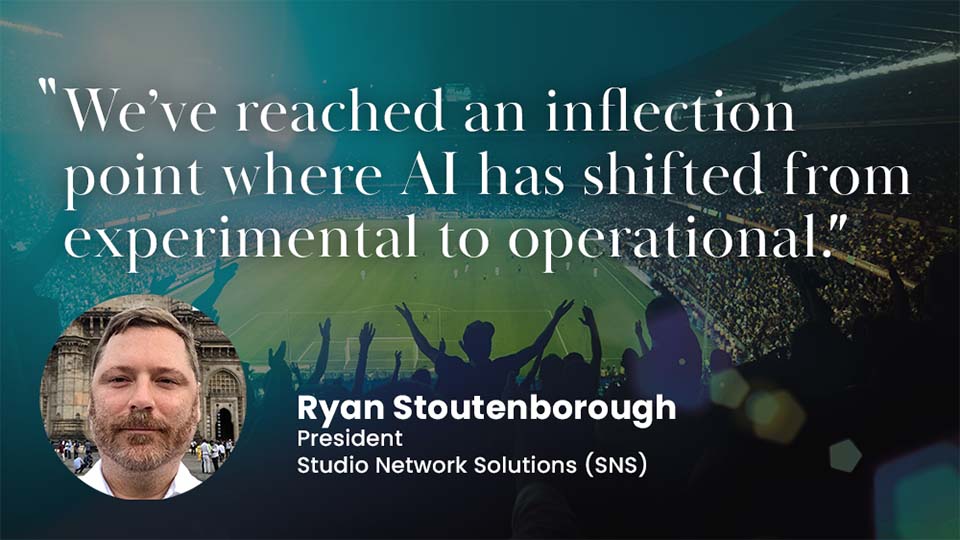
A: We’ve reached an inflection point where AI has shifted from experimental to operational. AI tools can now generate transcripts and captions automatically, translate content into multiple languages, identify players and highlights within video footage, create metadata for media asset management systems, and help production teams find content almost instantly. What’s most exciting to us is bringing these AI capabilities directly into professional production environments in a truly valuable way. The goal is not to replace creativity. It’s to give editors, producers, and content teams faster access to the right content so they can focus on storytelling, audience engagement, and delivering great fan experiences. And despite the industry’s push toward cloud and hybrid workflows, many production teams still prefer to keep AI processing on-premises.
Q: How is your technology or service helping your clients streamline their productions without compromising the quality of the production?
A: Broadcasters, sports leagues, and professional teams rely on fast access to video, dependable collaboration across editing teams, and the ability to work with high-resolution media from virtually anywhere. That’s exactly what we enable for production teams around the world. Whether it’s a live game, a postgame highlight package, or content for digital and social platforms, sports production teams are working against constant deadlines. With SNS, the right shared storage and media workflow infrastructure keeps those productions moving, faster, from anywhere.
The Takeaway
The thread running through every answer is the same: the tools that defined experimental workflows two years ago are now the baseline expectation for serious sports media operations. AI, hybrid-cloud infrastructure, and intelligent shared storage aren’t coming—they’re here, and the teams embracing them are already pulling ahead.

Want more perspectives from across the industry? SVG gathered executive viewpoints from leaders throughout sports broadcasting for their full 2026 Executive Perspectives report. It’s worth the read: SVG Executive Perspectives 2026.
And if the conversation above sounds familiar—if your team is navigating the same questions around storage, AI integration, or hybrid workflows—we’d love to dig into the specifics with you. Contact SNS to talk through your media storage and production workflow needs.